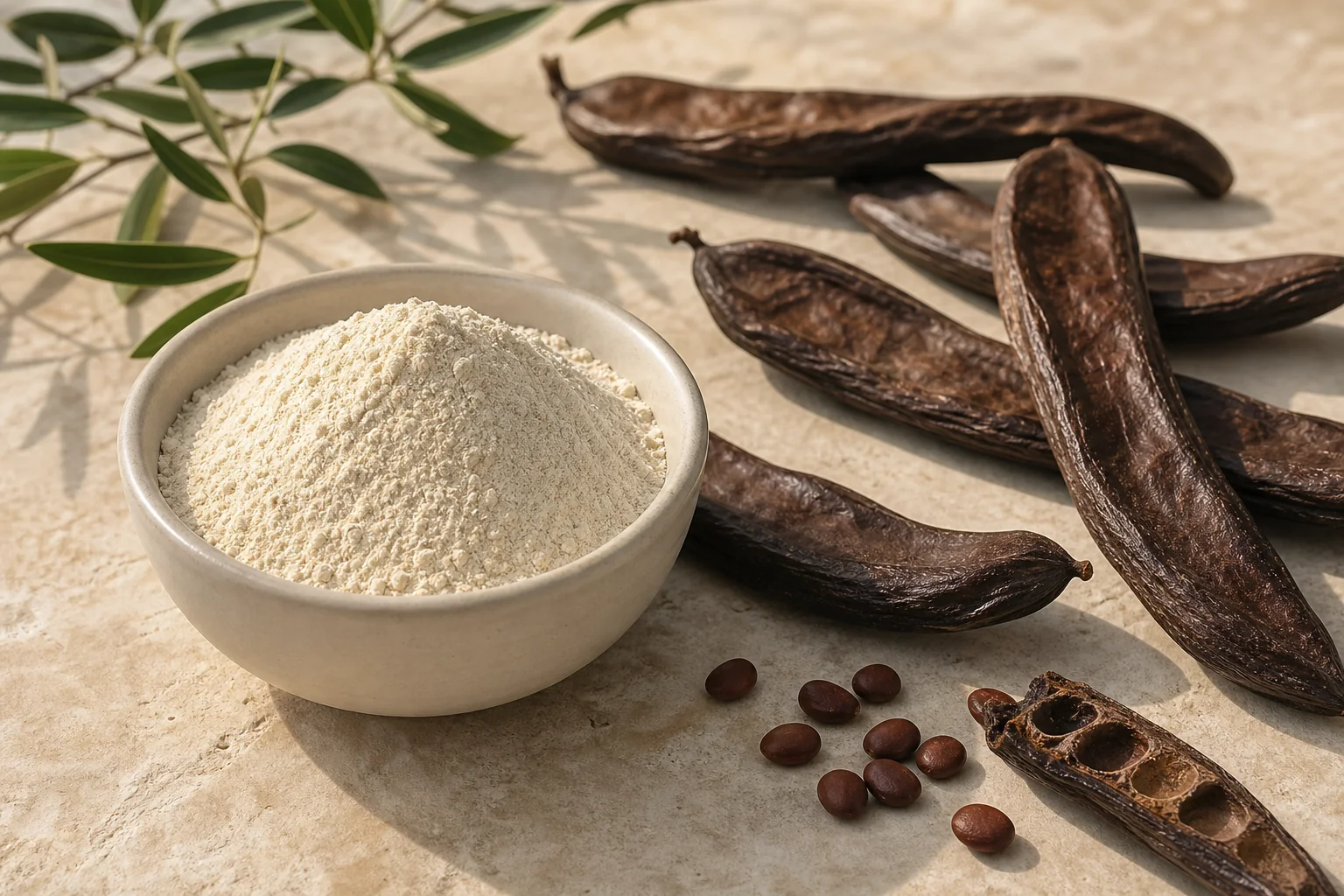
Reduced ice crystal formation
LBG binds free water in the mix, limiting how much is available to recrystallize into large ice crystals during freeze-thaw cycles.

Application
LBG binds free water and inhibits ice crystal growth, delivering a smoother, creamier body and stable freeze-thaw performance even after distribution temperature fluctuations.
Ice cream formulation is a balance of overrun, fat content and stabilizer system, and LBG has been a standard part of that system for decades. It's rarely used alone: most commercial stabilizer blends pair it with guar gum or carrageenan, each covering a different part of the freeze-thaw and meltdown behavior.
Ice crystal formation during freeze-thaw cycles ruins texture and mouthfeel, and inconsistent overrun leads to unpredictable product quality.
LBG binds free water and inhibits ice crystal growth, delivering a smoother, creamier body and stable freeze-thaw performance even after distribution temperature fluctuations.
LBG binds free water in the mix, limiting how much is available to recrystallize into large ice crystals during freeze-thaw cycles.
Less free water means a smoother mouthfeel, closer to what you'd expect from a higher-fat formulation.
The mix holds up better through the realistic temperature swings of transport and retail storage, not just in a lab freezer.
A more even melt keeps the product from collapsing quickly once served.
LBG needs full hydration during pasteurization, typically 80–85°C, to reach its working viscosity. Adding it dry to a cold mix without proper high-shear dispersion is the most common formulation mistake we see. It also performs best combined with a second hydrocolloid, such as guar gum for faster initial hydration or carrageenan for protein interaction control.
Every time it partially melts and refreezes, water migrates and forms larger ice crystals. A stabilizer's whole job is to slow that down.
Most formulations land between 0.1% and 0.3%. Grade A-01 is the one we'd point you to for maximum body.
Need Formulation Support?