Product Updates
How Locust Bean Gum Is Made
Locust Bean Gum starts as the seed of the carob tree (Ceratonia siliqua), a drought-tolerant species native to the Mediterranean basin. What food manufacturers know as a smooth, reliable hydrocolloid begins its life as a small, hard seed inside a carob pod, and getting from one to the other takes a few distinct steps.
1. Seed Selection
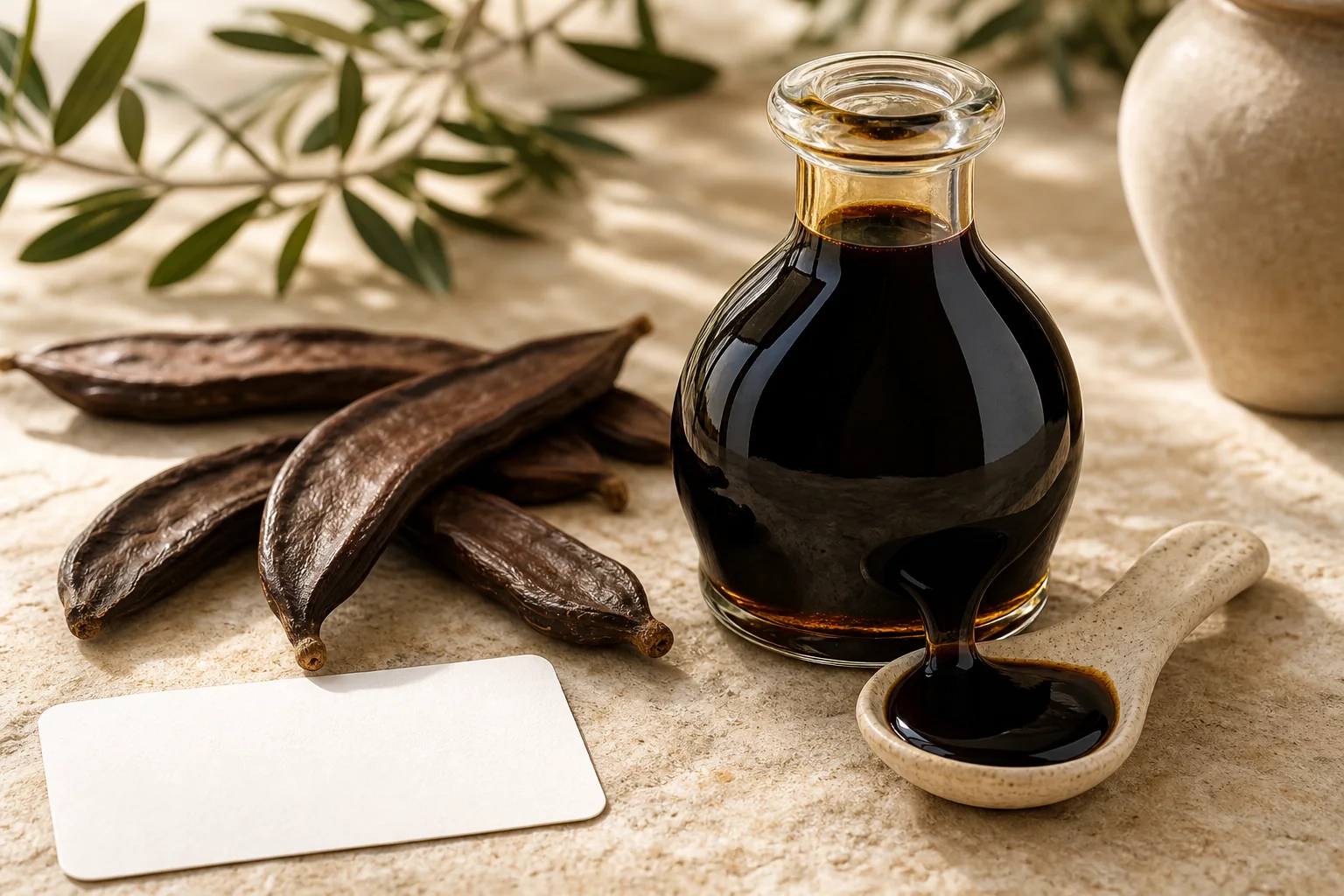
Carob pods are harvested and the seeds separated from the pulp. That pulp isn't thrown away, it goes on to become Carob Molasses. The seeds themselves are sorted for size and quality before processing starts.
2. Endosperm Separation
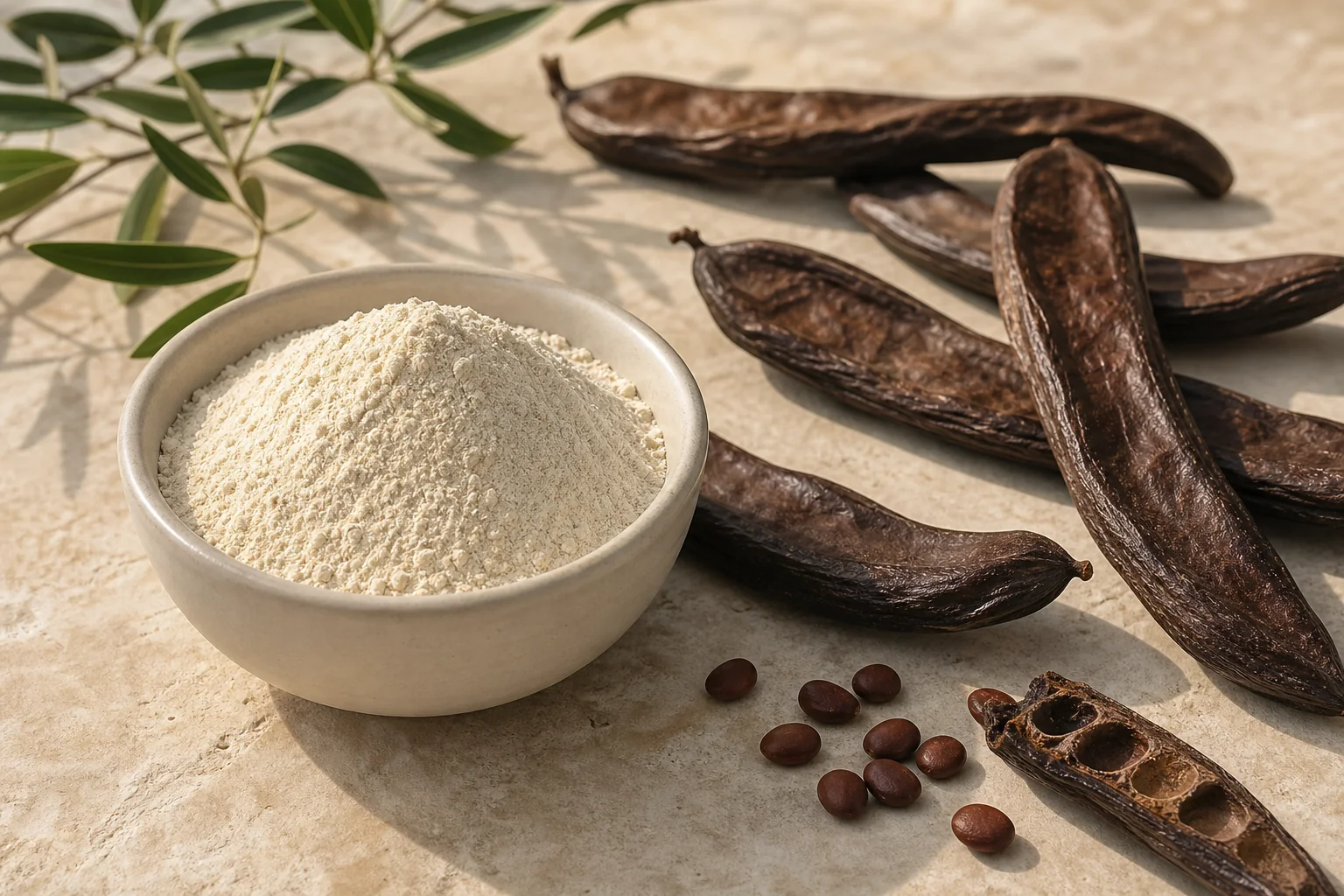
Each carob seed has three layers: the outer skin (husk), the germ, and the endosperm. LBG comes specifically from the endosperm, the layer that gives the seed its natural thickening properties. Separating it cleanly from the husk and germ is the most technically demanding step in the whole process.
3. Milling to Target Viscosity
The isolated endosperm gets milled to a fine powder. Particle size and milling conditions are controlled carefully, since they determine the final viscosity grade. That's the difference between INCOM's A-01 (2800–3000 cps) and A-02 (2400–2600 cps) grades, both coming from the same raw material.
4. Quality Control
Every production batch goes through INCOM's R&D laboratory for viscosity, moisture, pH and microbiological testing before a Certificate of Analysis is issued. Batches that don't meet spec don't get released.
5. Packaging & Export
Finished LBG is packed into 25 kg multi-layer kraft bags, palletized for container loading, and shipped from nearby Mersin Port to food manufacturers around the world.
Curious about the technical specifications behind each grade? See our Locust Bean Gum product page for full details.
More Articles